
This engineering SEO case study will focus on one company and its products and services.
However, I have had the pleasure of working in what is considered not sexy industries for many years. Companies like engineering, construction, fabrication, stone suppliers & quarries, timber suppliers, cladding, substation safety and a bicycle manufacturer – you get the idea.
I have worked with Powerpoint Engineering on and off for 10 years and consistently for the last two looking after their eCommerce SEO.
Understanding – The Problem
Due to the technical nature of this business, they have developed a tolerance for all my questions. Even though I have some knowledge of engineering from my mechanical engineering apprenticeship – that was a long time ago, and I changed careers very soon after.
Understanding the client’s products is the main goal at the start of all projects. Then understanding the client’s target market and their goals for growth, is a very close second.
SEO Project Task & Strategy
- Are the products and services local, national or international?
- Are they distributors and/or selling to end-users?
- Will they sell from their website or is this lead generation?
- Will the websites be multi-lingual?
- Do they run conferences or attend trade shows?
Knowing all of these helps plan the strategy and follow-on monthly and daily SEO tasks. The following is the shape that these projects have taken:
- In-house training
- Website reviews
- Content reviews – keyword research
- On-site SEO
- Off-site SEO – eCommerce link building
Training
Powerpoint have their own in-house marketing and web development team. When we first met, they already had well designed and good-looking websites. The websites were underperforming due to a lack of knowledge of search optimisation for Google.
Our first few training sessions helped the internal team understand how their roles intersected with SEO. Creating written SEO processes and plans that are directed at writers, marketing managers, and web developers were better than an overview SEO cheat sheet.
Tracking
It can seem tedious to track changes to the website. If you are just adding a new product or updating a services page, it is easier to just do it and get on with other work.
However, setting up sheets to track changes meant we could tie website and business outcomes into the changes. (We now also use a website audit tracker)
Website Reviews
Running a technical website audit at the start of all projects, or in months 2 to 4, is standard and good industry practice. This enables us to ensure that all problems that hinder rankings and user experience are eliminated or fixed at the start.
SEO audits aim to find and fix all ranking problems. There are no problems that are particular to engineering companies with the codebase.
Content Review and Keyword Research
These two were completed together as they inform each other. A clear understanding of the clients’ business is absolute to having good keyword research – this cannot be overstated.
The main problems occurred with content. Content that was the same on more than one website, manufacturer’s product descriptions being used. All of these problems were leading to some parts of the sites being filtered by Google and not appearing in search results.
This area is an ongoing problem, though less than it was. It is difficult to recruit and keep writers who can write high-quality product or service descriptions. Asking someone to write about a particular lockout tagout product and then do it over and over without using the same sentences is hard work. It is also expensive to keep technical writers.
The duplicate content across the websites, (more than 10), is now approaching an acceptable level.
Keyword research has also informed the blog content calendar and sharing on LinkedIn – where their audience can be found.
Link Building
Link building is required for any website to rank highly in Google’s search results. With engineering websites, we have two problems: creating good content for guest posts and the availability of target websites. This area is not like travel SEO or accountancy SEO where there are many more options.
On the plus side, these sectors tend to be less competitive and therefore need fewer links to rank.
As the company runs more than ten websites using WordPress and WooCommerce, we aimed to have each guest post placement link to two sites. This has helped to manage the cost, as link building is a long term – sometimes never ending – task.
You may also be interested in our SEO case study for a cosmetic surgery website.
Results
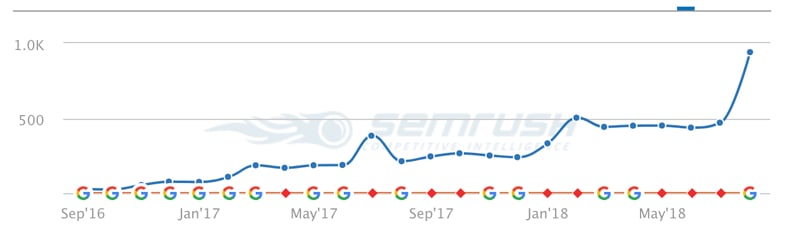
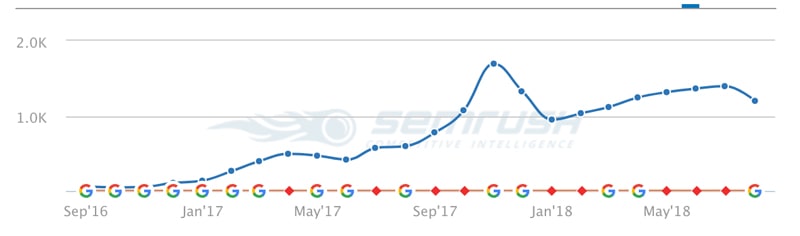
As can be seen from the images in this post, their traffic from Google has kept increasing. These images are from SEMRush who have third party data – the actual increases are substantially higher.
We also specialise in Google Ads campaigns in Ireland. All graphs show only Google organic traffic.
Can I help you? It is best to have an informal chat and let me learn your goals.

I am the founder and manager of BeFound SEO and the main consultant. I started offering SEO services back in 2007 when I had to explain SEO, as most people had no idea what it was and how much it could help their business online. I still love seeing the results from SEO.
When I’m not creating great strategy, I am usually out hiking up a mountain.
Connect with me on the links below.